
Why Coaches Must Understand Modern Recovery Modalities – Evidence-Based Education for the Most Influential Role in an Athlete’s Life

Coaches Are the Most Influential Figure in an Athlete’s Life
written by Hector L Torres – USA Triathlon Level 3 Coach
In today’s performance landscape, coaches do far more than prescribe workouts.
They influence:
-
Training decisions
-
Recovery behaviors
-
Injury responses
-
Long-term athlete health
Research and real-world experience consistently show that athletes follow their coach’s guidance before consulting a medical professional. That reality places coaches at the center of athlete decision-making — whether we intend to be or not.
👉 That makes recovery education a coaching responsibility, not an optional add-on.
Why Recovery Education Is a Competitive Advantage for Coaches
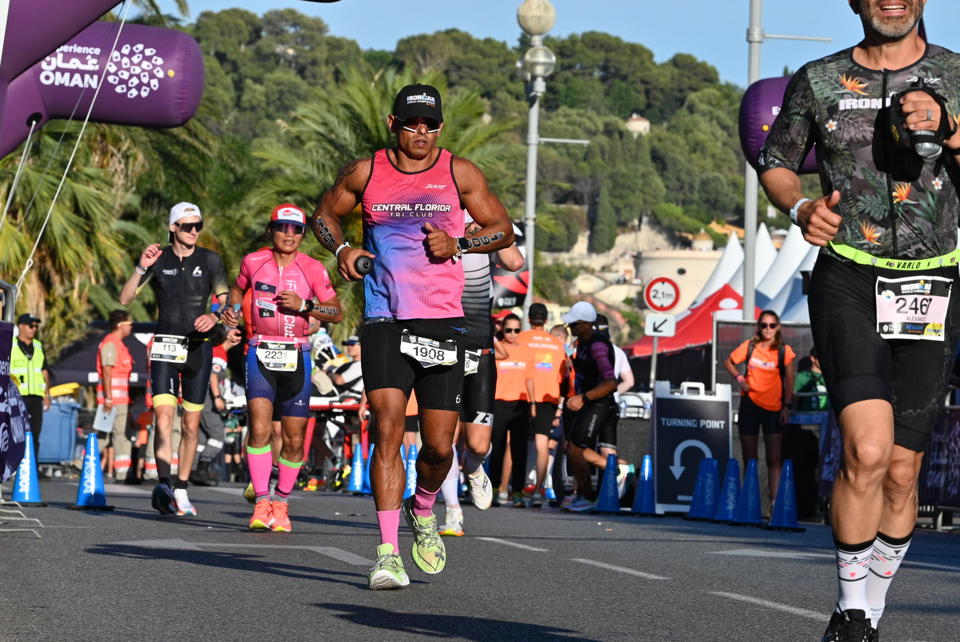
Modern athletes train:
-
More frequently
-
At higher intensities
-
With fewer true rest windows
This combination has led to:
-
Increased overuse injuries
-
Higher recurrence rates
-
Chronic pain becoming “normal”
📚 Studies published in the British Journal of Sports Medicine demonstrate that training load errors combined with insufficient recovery significantly increase injury risk.
The Coach’s Role in Recovery (Scope-Appropriate & Ethical)
Let’s be clear:
Coaches do not diagnose or treat injuries.
However, elite coaches:
-
Understand recovery options
-
Communicate effectively with clinicians
-
Modify training based on tissue readiness
-
Advocate for athlete longevity
📚 Sports injury prevention research highlights that coach awareness and referral behavior directly influence athlete outcomes.
Common Sports Recovery Modalities Coaches Should Understand
Manual Therapy (Massage, Soft Tissue, Joint Mobilization)
 What coaches should know:
-
Improves short-term mobility and pain
-
Therapist skill matters
-
Best combined with movement
📚 Manual therapy research shows benefits are maximized when paired with active rehabilitation.
Coach takeaway: Manual therapy prepares the body to train — it doesn’t replace training.
Exercise-Based Rehabilitation
What coaches should know:
-
Gold standard for long-term resilience
-
Progressive loading is essential
-
Movement quality matters more than intensity
Organizations like the American College of Sports Medicine and National Strength and Conditioning Associationconsistently emphasize exercise as the foundation of recovery.
Coach takeaway: Rehab and training should speak the same language.
Electrical Stimulation (TENS & EMS)
What coaches should know:
-
TENS can help with pain modulation
-
EMS can assist muscle activation
-
Effects are often surface-level
📚 Pain science research shows temporary relief, not long-term resolution, when used alone.
Coach takeaway: Helpful adjunct — not a standalone solution.
Ultrasound & Laser Therapy

What coaches should know:
-
Localized tissue effects
-
Results vary by dosage and application
-
Passive by nature
📚 Systematic reviews show mixed results depending on protocol consistency.
Coach takeaway: Works best when paired with movement and loading.
Shockwave Therapy
What coaches should know:
-
Effective for chronic tendon issues
-
Can be uncomfortable
-
Highly targeted
📚 Evidence supports its use in stubborn tendinopathies — not acute inflammation.
Coach takeaway: A precision tool, not a universal fix.
The Shift Toward Energy-Based Sports Recovery Modalities
Sports medicine has increasingly embraced energy-based therapies that:
-
Enhance circulation
-
Improve cellular metabolism
-
Reduce pain without mechanical stress
One of the most studied and globally adopted examples is TECAR Therapy.
SEO note: “TECAR therapy” and “radiofrequency therapy for athletes” are rapidly growing search terms.
What Is TECAR Therapy? (Coach-Friendly Explanation)
TECAR Therapy (Transfer of Energy Capacitive and Resistive) uses high-frequency radiofrequency currents (300 kHz–1 MHz) to stimulate the body’s natural healing mechanisms.
📚 Peer-reviewed research demonstrates:
-
Increased blood flow and vascularization
-
Improved tissue elasticity
-
Pain modulation at the nervous system level
-
Faster return to function
Athletes frequently report immediate improvements in movement and comfort, which increases buy-in and compliance.
Why Coaches Should Understand TECAR Therapy (But Not Perform It)
Understanding TECAR allows coaches to:
-
Speak intelligently with physical therapists
-
Adjust training loads responsibly
-
Avoid training through unresolved tissue stress
-
Improve long-term athlete durability
📚 A systematic review in the International Journal of Rehabilitation Research found TECAR therapy effective across acute, sub-acute, and chronic musculoskeletal conditions.
Coach takeaway: Education leads to better decisions — not scope creep.
Why Modern Systems Like Winback Matter for Coaches
Advanced TECAR platforms like Winback integrate:
-
TECAR radiofrequency
-
Hi-TENS for pain modulation
-
Hi-EMS for deep neuromuscular activation
📚 Research shows that medium-frequency stimulation enables deeper muscle activation with greater comfort, supporting neuromuscular control and recovery.
Coach insight: Athletes can recover while staying engaged in movement, not sidelined.
Recovery Is a Performance Multiplier, Not a Luxury
📚 Sports performance literature consistently shows:
-
Improved recovery → higher training quality
-
Higher training quality → better performance
-
Better recovery → fewer missed sessions
Elite coaches don’t see recovery as rest alone — they see it as strategic preparation.
Why This Matters for Coaching Longevity
Educated coaches:
-
Protect athlete health
-
Build trust and credibility
-
Strengthen interdisciplinary relationships
-
Keep athletes progressing instead of constantly rehabbing
Education is athlete protection.
Education is coaching leadership.
Education is performance sustainability.
Trusted Resources for Coaches
-
International Journal of Sports Physical Therapy
-
British Journal of Sports Medicine
-
American College of Sports Medicine
-
National Strength and Conditioning Association
-
Peer-reviewed TECAR Therapy clinical studies
Final Thought for Coaches: Education Is Leadership
Coaching is influence.
Athletes trust you with their training decisions, their confidence, and often their long-term health. When pain, tightness, or recurring issues appear, they don’t just look for relief — they look for guidance.
Staying informed about modern recovery and rehabilitation modalities is not about stepping outside your scope. It’s about leading responsibly, protecting athletes from poor decisions, and helping them access the right care at the right time.
The most effective coaches today don’t pretend to have all the answers — they know where to send athletes and who to trust.
Where Coaches and Athletes Can Learn More
If you want to better understand TECAR Therapy and how it’s being used by physical therapists, chiropractors, and sports medicine professionals worldwide, Winback offers extensive educational resources, clinical explanations, and practitioner directories.
👉 To find a certified Winback clinician or technician near you, visit:
https://www.winback.us
This allows coaches to:
-
Refer athletes confidently
-
Align with evidence-based recovery care
-
Build stronger relationships with trusted clinicians
-
Support athlete longevity without guessing
The Standard We Should Hold as Coaches
The best coaches don’t just ask:
“How do I make my athletes faster or stronger?”
They ask:
“How do I keep them healthy, consistent, and progressing for years?”
- Education is how we protect athletes.
- Education is how we earn trust.
- Education is how we elevate the profession of coaching.
Stay curious. Stay informed. Stay responsible.
That’s leadership.
References
Bahr, R., & Engebretsen, L. (2009). Sports injury prevention research. British Journal of Sports Medicine, 43(13), 1001–1002. https://doi.org/10.1136/bjsm.2009.066647
Beltrame, R., Ronconi, G., Ferrara, P. E., Salgovic, L., Vercelli, S., Solaro, C., & Ferriero, G. (2020). Capacitive and resistive electric transfer therapy in rehabilitation: A systematic review. International Journal of Rehabilitation Research, 43(4), 291–298. https://doi.org/10.1097/MRR.0000000000000424
Bialosky, J. E., Bishop, M. D., Price, D. D., Robinson, M. E., & George, S. Z. (2009). The mechanisms of manual therapy in the treatment of musculoskeletal pain: A comprehensive model. Journal of Orthopaedic & Sports Physical Therapy, 39(2), 70–80. https://doi.org/10.2519/jospt.2009.0103
Bjordal, J. M., Johnson, M. I., Iversen, V., Aimbire, F., & Lopes-Martins, R. A. (2003). Low-level laser therapy in acute pain: A systematic review of possible mechanisms of action and clinical effects. The Lancet, 366(9495), 158–164.
Dunabeitia, I., Arrieta, H., Torres-Unda, J., Gil, J., Santos-Concejero, J., Gil, S. M., Irazusta, J., & Bidaurrazaga-Letona, I. (2018). Effects of capacitive-resistive electric transfer therapy on physiological and biomechanical parameters in recreational runners: A randomized controlled crossover trial. Physical Therapy in Sport, 32, 227–234. https://doi.org/10.1016/j.ptsp.2018.05.005
Gabbett, T. J. (2016). The training—injury prevention paradox: Should athletes be training smarter and harder? British Journal of Sports Medicine, 50(5), 273–280. https://doi.org/10.1136/bjsports-2015-095788
Kellmann, M., Bertollo, M., Bosquet, L., Brink, M., Coutts, A. J., Duffield, R., Erlacher, D., Halson, S. L., Hecksteden, A., Heidari, J., Kallus, K. W., Meeusen, R., Mujika, I., Robazza, C., Skorski, S., Venter, R., & Beckmann, J. (2018). Recovery and performance in sport: Consensus statement. International Journal of Sports Physiology and Performance, 13(2), 240–245. https://doi.org/10.1123/ijspp.2017-0759
Notarnicola, A., Maccagnano, G., Gallone, M. F., Covelli, I., Tafuri, S., & Moretti, B. (2017). Short-term efficacy of capacitive-resistive diathermy therapy in patients with low back pain: A prospective randomized controlled trial. Journal of Biological Regulators and Homeostatic Agents, 31(2), 509–515.
Sluka, K. A., & Walsh, D. (2003). Transcutaneous electrical nerve stimulation: Basic science mechanisms and clinical effectiveness. The Journal of Pain, 4(3), 109–121. https://doi.org/10.1054/jpai.2003.434
Soligard, T., Schwellnus, M., Alonso, J.-M., Bahr, R., Clarsen, B., Dijkstra, H. P., Gabbett, T., Gleeson, M., Hägglund, M., Hutchinson, M. R., van Rensburg, C. J., Khan, K. M., Meeusen, R., Orchard, J. W., Pluim, B. M., Raftery, M., Budgett, R., & Engebretsen, L. (2016). How much is too much? (Part 1) International Olympic Committee consensus statement on load in sport and risk of injury. British Journal of Sports Medicine, 50(17), 1030–1041. https://doi.org/10.1136/bjsports-2016-096581
Ward, A. R., & Shkuratova, N. (2002). Russian electrical stimulation: The early experiments. Physical Therapy, 82(10), 1019–1030.
Winback. (2022). Tecar Therapy White Paper: Clinical Applications and Scientific Evidence. Winback SWIMS America Corp. https://www.winback.us
Discover more from Tri Peak Athlete
Subscribe to get the latest posts sent to your email.


1 COMMENTS